
“What in the World Is Wrong With Your Lung?” Taylor’s Lung Carcinoid Tumor Story
Taylor’s lung carcinoid tumor (lung cancer) experience began at just 21 while attending college, where she was living what many would consider the dream: playing Division 1 (D1) soccer and excelling academically. But unexplained symptoms like numbness and fatigue began to disrupt her day-to-day life and athletic goals. Despite repeated tests, her lung cancer symptoms (and her parent’s advocacy) were dismissed as minor, a common challenge younger patients face.
Interviewed by: Keshia Rice
Edited by: Chris Sanchez
Persistent recurrent pneumonia ultimately led Taylor to the emergency room, where a CT scan revealed a collapsed lung and a mass. That moment marked the turning point: both her self-image and her family’s role became central as her mom tirelessly advocated for more thorough investigation, ultimately resulting in Taylor’s diagnosis of lung cancer (specifically, a carcinoid tumor, which is a kind of neuroendocrine tumor). Their search led Taylor to a world-class surgical team at the Duke Cancer Institute, where she had surgery, including a minimally invasive lobectomy.
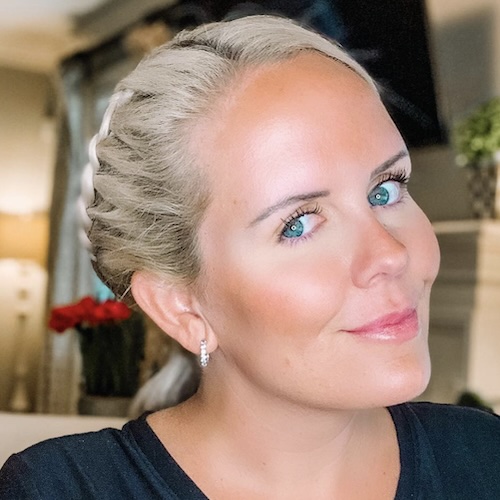
Navigating her lung cancer treatment was physically and emotionally demanding, but it ignited Taylor’s commitment to patient self-advocacy. She found herself at the forefront of challenging lung cancer stigma, especially the misconception that only smokers get lung cancer. Taylor’s experience highlights the importance of compassion and personalized care, regardless of background or risk factors.
Taylor’s lung cancer experience is marked by active advocacy, transparency about her IVF process, and grounded family support. Her approach encourages others facing lung cancer to seek second opinions, empower themselves with information, and never underestimate the value of dedicated care partners.
Watch Taylor’s video or read the edited transcript of her interview to find out more about her story.
- Early symptoms of lung cancer can be subtle and easily overlooked, especially in younger patients
- Surgery and recovery for lung cancer come with profound physical and emotional challenges
- Breaking lung cancer stigma creates space for compassion, regardless of patient history
- Advocacy transforms patients into empowered partners within their care teams
- Every patient deserves to be seen, heard, and supported: a universal truth for anyone facing a serious health diagnosis
- Name: Taylor D.
- Age at Diagnosis:
- 21
- Diagnosis:
- Lung Cancer (Carcinoid Tumor)
- Staging:
- Stage 1B
- Symptoms:
- Numbness and tingling in toes
- Fatigue and shortness of breath, leading to inability to pass fitness test required to play Division 1 soccer
- Treatment:
- Surgeries: video-assisted thoracoscopic surgeries (VATS): left upper lobectomy, lingula removal

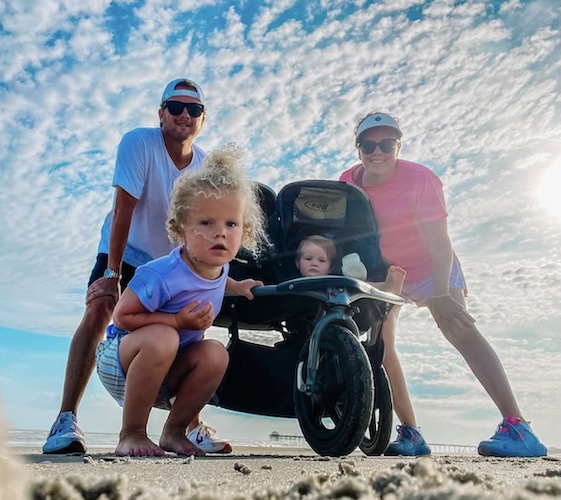
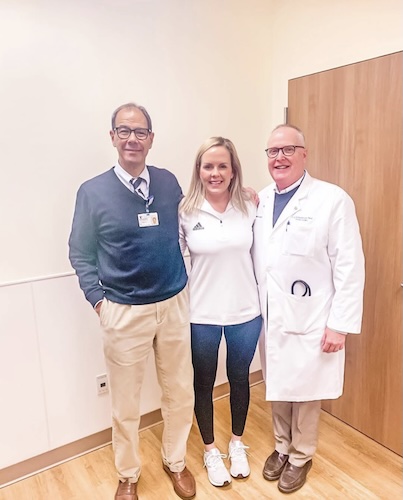
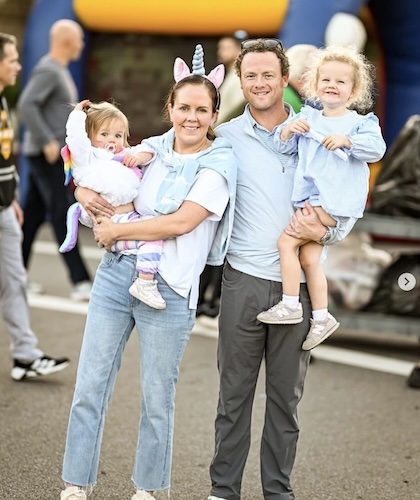
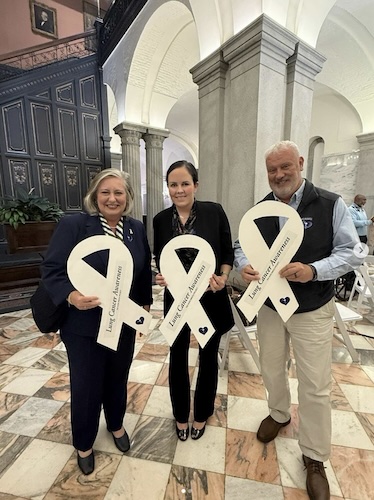


This interview has been edited for clarity and length. This is not medical advice. Please consult with your healthcare provider to make informed treatment decisions.
The views and opinions expressed in this interview do not necessarily reflect those of The Patient Story.
- My name is Taylor
- How my diagnosis unfolded
- Being diagnosed at 21
- Age bias and early advocacy
- Parental advocacy and second opinions
- My treatment experience
- How I deal with stigma
- My advocacy activities
- Biomarker testing and research progress
- Living with uncertainty and being in remission
- Motherhood, my IVF experience, and advocacy
- Family and spousal support
- Challenges and opportunities in healthcare
- Words for my younger self
- Advice for newly diagnosed patients
My name is Taylor
My name is Taylor, and I was diagnosed with lung cancer when I was 21. In 2007, I was diagnosed with what they call a [lung] carcinoid tumor, which was about four centimeters in my left upper lobe. At the time, it would have been considered stage 1B.
How my diagnosis unfolded
My entire childhood, my dream was to play Division 1 college soccer, and I was able to achieve that dream. I was offered to play at East Carolina University in Greenville, North Carolina. I arrived in my freshman year in the best shape of my life, or so I thought. I started having issues with numbness and tingling in my toes, and I was unable to pass a fitness test required by the university to play.
We ran at 5 a.m. every Tuesday until everyone passed. As the weeks went by, I was the only one who hadn’t passed, which really didn’t make sense considering how much time I spent playing. We started doing tests, nerve conduction study, MRI, chest X-ray, several other things, but nothing was really showing up as the cause of my symptoms: numbness in my toes and being fatigued and out of breath.
Eventually, I thought that maybe I was making this up, maybe nothing was really wrong. My coach gave me some grace, and I could still play, but after my freshman year, I decided maybe I was burned out. Maybe this wasn’t right for me. I quit playing soccer, which, if you know anything about Division 1 college athletes, is pretty unusual.
My parents were concerned, even worried, since I’d dedicated my entire childhood to playing soccer. I got involved in a sorority and started living the average college life. About a year later, I kept getting recurrent pneumonia, which is actually how I got diagnosed. We had another chest X-ray. At the time, they did not tell me further follow-up was needed, but when we got my medical records, we learned it was recommended.
What ultimately led to my diagnosis was ending up in the emergency room on a Saturday at 11 p.m., thinking my appendix was rupturing. They did a CT of my abdomen and pelvis. When the doctor walked in, she said, “Your stomach, abdomen, and appendix look okay. You have a cyst or two on your ovaries, but for someone your age, that’s fairly normal. But what in the world is wrong with your lung?” My sister and I were alone; my parents were on a Boy Scout trip without cell service. The doctor said, “You have a four-centimeter mass, and your left lung is almost completely collapsed. Are you having trouble breathing?” Immediately, I thought, maybe that’s why I couldn’t pass the fitness test.
That started my diagnosis. I had a bronchoscopy and all the tests to get a confirmed diagnosis, but that’s how it happened.
Being diagnosed at 21
It was shocking. You think you’re invincible as a college kid — you’re healthy, you’re having fun, cancer shouldn’t hit you at 21.
For me, there is a family history of lung cancer. I’ve lost my grandmother, great-grandfather, and great-uncle to lung cancer. I wasn’t terribly surprised, given my family history.
As a 21-year-old, never-smoking, former Division One college athlete, I didn’t fit the typical profile of someone who gets lung cancer.
Age bias and early advocacy
I mentioned the chest X-ray done at Student Health. My mom had tried to advocate for me two hours away — she knew I kept getting sick and that we had a family history. She asked the doctor to do a CT scan and explained the symptoms and history, but the provider told my mom she was being dramatic and that 21-year-olds, especially Division 1 athletes, don’t get lung cancer. Eventually, he did a chest X-ray, told me everything was fine, gave me a Z-Pak, and sent me on my way.
Later, when my mom got my records after I was diagnosed, we learned the radiologist had recommended follow-up from that chest X-ray, but no one had told me. That could have been an opportunity for quicker diagnosis, and for many people, it could have affected their prognosis.
Parental advocacy and second opinions
Although my later diagnosis did not change my particular prognosis, with my kind of lung cancer being slow-growing, for many, a delayed diagnosis can change everything.
My parents were instrumental in getting a second opinion for me. After my confirmed diagnosis, I was seen in Wilmington, North Carolina, where no fellowship-trained cardiothoracic surgeon was available; just a general surgeon willing to remove my lung with a large incision.
Thankfully, my parents researched the best place for me, and I ended up at an NCI-designated cancer center at Duke, where I was treated by one of the world’s leading thoracic surgeons. Their advocacy was critical for my outcome.
My treatment experience
Compared to many, I had it easier.
In 2007, there weren’t systemic options for carcinoids; surgery was the only treatment. I had a left upper lobectomy and lingula removal via minimally invasive video-assisted thoracoscopic surgery (VATS). It’s a small keyhole incision on my left side between ribs, plus a 2-3 inch incision under my left breast to pull the lung out.
The recovery was difficult, both physically and emotionally. I wasn’t prepared for the pain, and healing from that was the most challenging part. After surgery, they told me, “Hopefully, we’ll get clean margins, and you’ll be scanned every three months, then less often if there’s no evidence of disease.”
I did have clean margins, so my staging was T2N0M0: no nodes positive, no metastatic disease. I didn’t need chemo or radiation. If I’d had progression or my nodes were positive, I’m not sure systemic therapy would have helped anyway. I’m definitely one of the lucky ones, especially considering my tumor’s size.
How I deal with stigma
Initially, I’d just say, “No, I wasn’t a smoker” when people asked. At 21, even if I had smoked, I would’ve had to start at two years old. It’s an unreasonable question. It doesn’t matter if you’re a smoker or not; no one, despite their lifestyle, deserves cancer. Clinically, I understand the physician’s perspective, but otherwise it’s irrelevant. I’ve worked to change the stigma — being public about my diagnosis — because the stereotype that only smokers get lung cancer is so harmful.
We don’t blame people who are obese and get breast cancer, or people who drink and get liver cancer. Why blame smokers? Many started before it was even known to be harmful; cigarettes were given out free to military personnel. Regardless of whether they smoked, people deserve compassion. Now, if someone asks, “Did you smoke?” I reply, “Does that make you care less?” Honestly, it’s irrelevant and quite rude.
My advocacy activities
I’ve been fortunate to speak publicly, especially early on after my diagnosis. My physician first suggested advocacy at my three-month follow-up after surgery, when I was emotionally low. He said, “We need your voice. Do you know the facts about lung cancer?” He explained it’s the number one cancer killer of men and women, more deadly than breast, prostate, and colon cancers combined, yet it’s the least funded major cancer.
He also stressed that only 15% of lung cancer patients survive. He invited me to speak at a conference, sharing my story, and that was my advocacy start. I’ve worked with the North Carolina Lung Cancer Alliance, Bonnie J Foundation (now the GO2 Foundation), Lungevity, and other groups, as well as industry partners. Projects like Your Cancer Game Plan help patients create action plans. I also help educate medical device sales forces about the need for quick, early diagnosis. I now work in the industry, which feels full circle.
Biomarker testing and research progress
In 2007, there were no known biomarkers for lung cancer; Tarceva for EGFR mutations came a year or two later.
At that time, it was “get your chemo, get your radiation, and pray.”
We’ve come a long way in 18 years, and I wish I’d known whether I had mutations, but it wasn’t available then.
Living with uncertainty and being in remission
Early on, I struggled with anxiety. I was scanned every three months, then every six months, then yearly after three years. A year felt like a long time. I have two small ground glass nodules in my lung from before the resection, and they’re always on my mind. My surgeon is confident they’re not cancerous, but the uncertainty is always there. I was scanned until year 13.
Now, my physician, PA, and I have decided the risk of more CT scans outweighs the benefits of continued monitoring. Some might say I’m “cured,” but I prefer “healed.” Whatever happens, I’ll be okay. My faith sustains me.
Recently, I had pain in my upper right abdomen. An ultrasound showed my liver was enlarged, possibly due to recent Tylenol use. They wanted to do a CT of my abdomen and pelvis; I insisted they also scan my chest to check my lungs, and after explaining my history, they agreed.
Such conversations remind me: you never stop living with the diagnosis, even 18 years later.
Motherhood, my IVF experience, and advocacy
My diagnosis turned me into a lifelong healthcare advocate. Some doctors probably groan when they see me; I’m persistent. I’m open about my IVF journey since speaking out helps other women. I wasn’t having trouble getting pregnant, but staying pregnant. I had two miscarriages and two D&Cs. After the second, I insisted on blood work and a semen analysis for my husband before trying again. The physician reluctantly agreed, and test results changed everything: my AMH was very low, indicating diminished ovarian reserve. We moved straight to IVF, since levels can drop quickly, and I didn’t want an only child if possible.
Advocacy made my family possible. If I’d tried a third time on my own, another miscarriage or a long pregnancy could have dropped my AMH further and made a second child impossible.
Family and spousal support
My husband, Robert, is amazing. Social media was barely a thing in 2007, so our story isn’t documented online. We met two weeks before my diagnosis, after a flag football game where I dislocated my finger; he was the opposing team’s coach. He came to check on me, then messaged me on Facebook.
His commitment is genuine love. If I’d met someone and learned two weeks later they had lung cancer, I might have walked away. He didn’t; he dived in headfirst. The first time he met my parents was at Duke Hospital, while I was in the ICU, still in his practice clothes as a high school basketball coach. He stayed overnight so my parents could rest. He’s always been supportive, especially as my advocacy work and travel increased after having children.
Challenges and opportunities in healthcare
We have come a long way, but there is still more to do. Lung cancer screening now exists — when I was diagnosed, it didn’t — but patients who qualify must get screened. This requires awareness from patients and encouragement from clinicians. Providers should recommend lung cancer screening with the same urgency as mammograms or colonoscopies.
I’d love to see everyone get screening, not just those meeting strict criteria. Targetable mutations now allow specific therapies for many patients. Data shows that if you get the right therapy for your cancer, outcomes improve. Yet it’s shocking how many patients aren’t offered biomarker testing upfront. In my view, that should be malpractice.
Not all cancer centers are NCI-designated, but good care exists at community oncologists nationwide. Get care locally, obtain a second opinion from a major center when possible, or even virtually. Advocate for yourself. The system is complex, options are numerous, and it’s easy to fall through the cracks.
Words for my younger self
If I could go back and speak to my 21-year-old self, I’d tell her to buckle up. Whatever hand you’re dealt, you can do it.
My mom always said to bloom where you’re planted and leave things better than you found them. That’s been my outlook.
I try to make a difference for others, so anyone dealt the hand I was dealt gets a shot at a better outcome.
Advice for newly diagnosed patients
I spend a lot of time talking to patients, whether through friends or direct outreach. The first thing I tell everyone is to get a second opinion and ensure they’ve had biomarker testing. Make sure you’ve seen an interventional pulmonologist for proper staging and diagnosis, and that treatment aligns with NCCN guidelines.
Prepare for surgery. I talk about the pain and what patients can do to survive it. If you’re getting a lung resection, get a recliner at home.
There are so many tips and tricks you only learn by experience, so I try to be a cheerleader and champion so patients have the best experience possible.
Inspired by Taylor's story?
Share your story, too!
Related Stories
Regina J., Lung Neuroendocrine Tumor
Symptoms: Wheezing, back pain, coughing that sometimes produced blood
Treatment: Surgery (partial lung resection)
...

Tabbie V., Pancreatic Neuroendocrine Tumor (pNET)
Symptoms: Abdominal pain, unusual organ "inflammation" feeling when walking, fatigue
Treatments: Chemotherapy (oral and IV), surgeries (Whipple procedure or pancreaticoduodenectomy, liver resection or partial hepatectomy)
...
Hayley O., Pancreatic Neuroendocrine Tumor (pNET)
Symptoms: Severe right-sided pelvic pain, nausea, diarrhea
Treatment: Surgery (pancreaticoduodenectomy or Whipple procedure)
...

Drea E., Gastric Neuroendocrine Tumor (gNET), Stage 3, Grade 1
Symptoms: Fainting spells, fatigue, dizziness, anemia, shortness of breath, absence of menstruation, unexplained weight loss, night sweats
Treatment: Surgery (total gastrectomy with a Roux-en-Y reconstruction)
...