
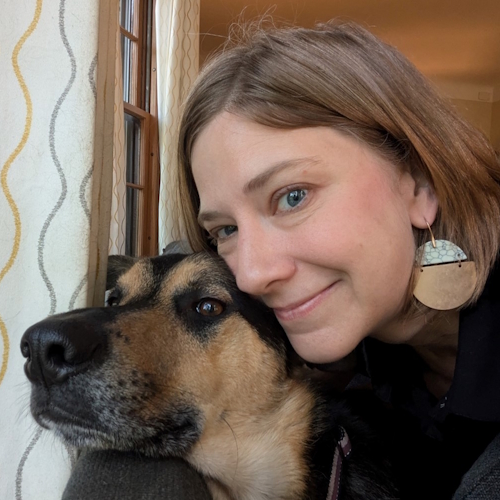
“I have a good quality of life for a stage 4 cancer patient.”: Summer Farmen’s ALK-Positive Lung Cancer Story
Summer had spent years staying in shape, teaching fitness classes and coaching cheerleading, so she didn’t fit the profile she associated with lung cancer. Her only known health issue was asthma, so when a persistent cough showed up during the pandemic, it was treated first as pneumonia, over telehealth. But it kept getting worse.
Edited by: Katrina Villareal
Then she landed in the emergency room alone, gasping for breath, texting her children and her parents while doctors tried to figure out what was wrong with, in her words, “the mother who’s never needed any help.” Her right lung was completely crushed. It turned out that two liters of fluid had been building around it. A pulmonologist came in to talk about the scans. There were tumors.

Doctors explained they’d run a tissue biopsy, then send it to a specialty lab to look at the exact makeup of the cancer. Four days later, Summer got the call that confirmed it was lung cancer. Her dad was there when she got the news and they stood on the front lawn hugging and crying. Her daughter, 17 at the time and heading into her senior year, caught something in the moment that gave her pause. “This is still cancer. What are we celebrating?” Summer and her dad explained that yes, it was cancer, but they had hopes it would have a mutation and be a certain kind of lung cancer that could be treated differently. Biomarker testing found Summer carried an ALK fusion, a mutation that meant her cancer could be treated differently.
That single result changed her entire treatment path. Instead of chemotherapy, Summer started on targeted therapy pills. Her oncologist, the second opinion who became her primary doctor, called it the best news they could have hoped for.
In an interview with Dr. Eric Singhi, a thoracic medical oncologist at UT MD Anderson, he explains some new and hopeful data findings presented at ASCO 2026. In the ALK-positive space specifically, doctors are now looking at some of the longest, most durable targeted therapy results ever reported in solid tumor cancer, including new data on how long that protection holds and how well it protects the brain.
Six years later, Summer just celebrated her 50th birthday, one she didn’t expect to see. She still deals with side effects: blood pressure medication she never needed before, a cardiologist she never needed before, and rashes. But she’s back to lifting and caring for her son, Jackson, who has cerebral palsy, and she describes her quality of life as genuinely good for someone living with stage 4 cancer. Summer found her community, the people who get it without her having to explain it, through an ALK-positive support group her dad found and pushed her toward. She didn’t think she needed it. It turned out to be “the biggest gift and such a lifeline.”
Watch Summer’s video or read the edited transcript of her interview to find out more about her story. Then follow the links to our webinar on the latest ALK research reporting new data that is helping redefine what long-term disease control can look like in ALK+ lung cancer.
- Ask specifically about biomarker testing, not just what kind of cancer. Summer had never heard the word “biomarker” before her diagnosis. The testing that followed, a tissue biopsy sent to a specialty lab, is what identified her ALK mutation and opened up a completely different treatment path than chemotherapy.
- The wait for biomarker results is hard, but it isn’t wasted time. Summer described a real wait with “a couple of little mishaps along the way.” Dr. Singhi’s advice for that stretch: Use it to focus on your mental and physical health and to write down the questions you want to ask your care team, because a precise result is worth the wait.
- Long-term survival brings its own, different challenges. Summer calls this “a great problem to have,” but a real one: Living six-plus years with ALK-positive cancer means her disease and her side effects keep changing, and new symptoms can show up even after old ones resolve.
- A support community can make a massive difference as you navigate a cancer diagnosis. Summer describes a genuinely supportive family, but says nobody understands quite like someone actually living it. The ALK-positive support group her father found became, in her words, “the biggest gift and such a lifeline.”
Summer’s Diagnosis Facts
- Name: Summer Farmen
- Diagnosis:
- Non-Small Cell Lung Cancer (NSCLC)
- Staging:
- Stage 4 (Metastatic)
- Biomarker:
- ALK
- Symptoms:
- Persistent cough that was initially treated as pneumonia
- Collapsed right lung
- Pleural effusion
- Treatment:
- Targeted therapy
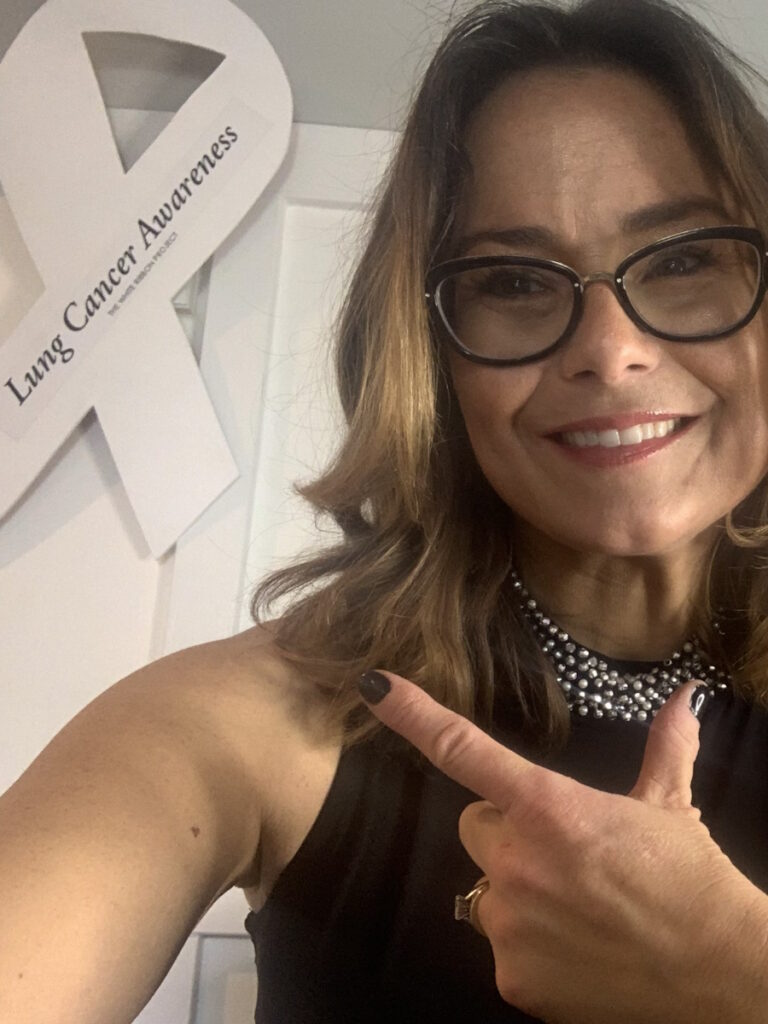
Program Sponsor

Thank you to our sponsor for their support of our independent patient education program. The Patient Story retains full editorial control over all content.
This is not medical advice. Please consult with your healthcare provider to make informed treatment decisions.
I would have done anything to have more time.
Summer Farmen, Stage 4 ALK-Positive Lung Cancer Patient Advocate
Summer’s ALK-positive lung cancer diagnosis
That’s how Summer describes what was going through her mind in the early days after her diagnosis. “Did I have three months? Did I have six months? Did I have a year?”
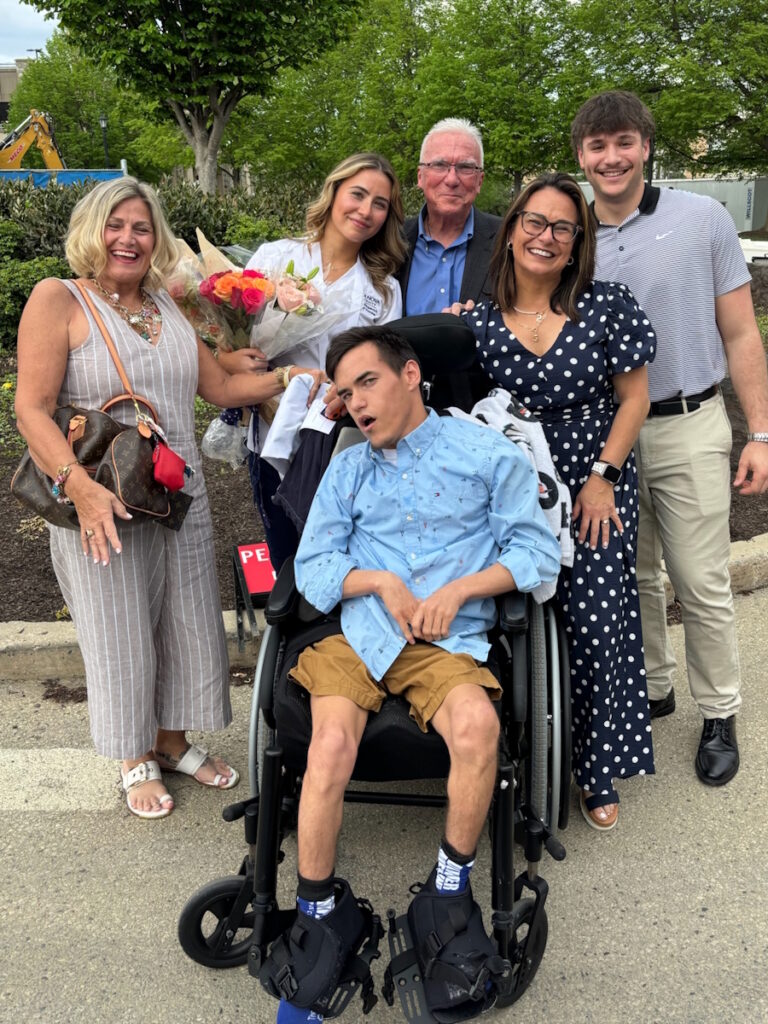
Summer had always stayed in good shape, in part so she could be the best mom she could be to her son, Jackson, and to her other kids. “I didn’t have risk factors for lung cancer, let alone cancer at all,” she says.
She had asthma, but she’d also been a Zumba instructor. She’d taught fitness classes when she was younger. She’d coached cheerleading. “I was always staying in good shape.”

Something was wrong
Then, during the pandemic, Summer developed a cough. Everyone around her was quarantining, and with her asthma and a son with cerebral palsy in the house, the family was already taking precautions. The cough was first treated as pneumonia, over telehealth, since almost nobody was going in anywhere in person at that point. “From there, things progressed and escalated,” she says. She ended up in the emergency room alone, texting her children and her parents, trying to figure out, in her words, what was wrong with “the mother who’s never needed any help.”
Suddenly here I was, gasping for breath.
Summer Farmen, Stage 4 ALK-Positive Lung Cancer Patient Advocate
“When I went in there, the level of attention and care that I received was quite alarming,” Summer says. “They were all over me, immediately whisking me through triage, asking me a million questions.”
Come to find out, her right lung was completely crushed. Two liters of fluid had been building around it. “A pulmonologist came in and started talking about the scans, and that there were tumors,” she says.
Finding a biomarker allows your oncology team to deliver very precise medication.
Dr. Eric Singhi, Thoracic Medical Oncologist, UT MD Anderson Cancer Center
Hearing the word “biomarker” for the first time
Before that day, Summer had never heard the term biomarker. She was fluent in a different world entirely, the world of cerebral palsy and neonatal care, from years of caring for her son, Jackson. Cancer terms were less familiar. “I knew what a biopsy was, but not biomarker testing,” she says. The pulmonologist started explaining next-generation sequencing (NGS) and biomarker testing right there.
“It started with the tissue biopsy,” Summer says. “They explained that they were going to do some in-house testing with that, and then send it out to a specialty lab that would then dive further into it and look exactly at the makeup of the cancer.”
About four days later, the call came: It was lung cancer. Her dad happened to be at her house when it came through, and the two of them stood on the front lawn, hugging and crying. Her daughter, 17 at the time and heading into her senior year, caught something in the moment that gave her pause. “Wait, wait, wait,” she said. “This is still cancer. What are we celebrating?” Summer and her dad explained that she potentially had a mutation, a certain kind of lung cancer that could be treated differently.
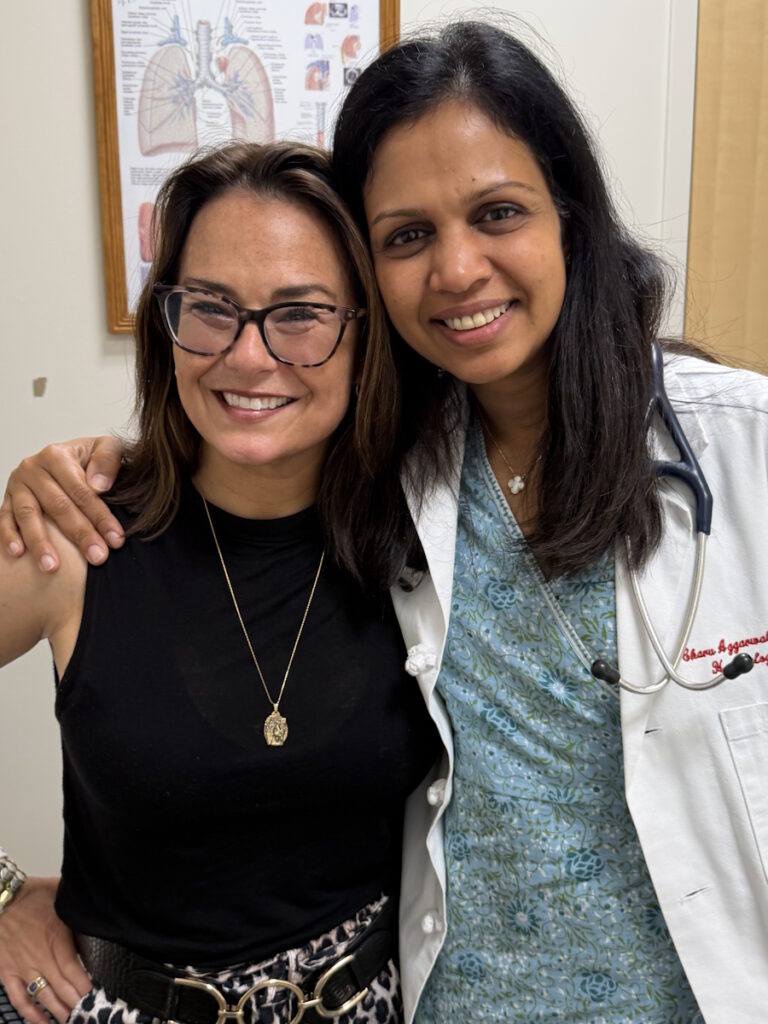
Focus on your mental health, prioritizing your physical health, and writing down any questions that you have for your team. Utilize that wait to your advantage.
Dr. Eric Singhi, Thoracic Medical Oncologist, UT MD Anderson Cancer Center
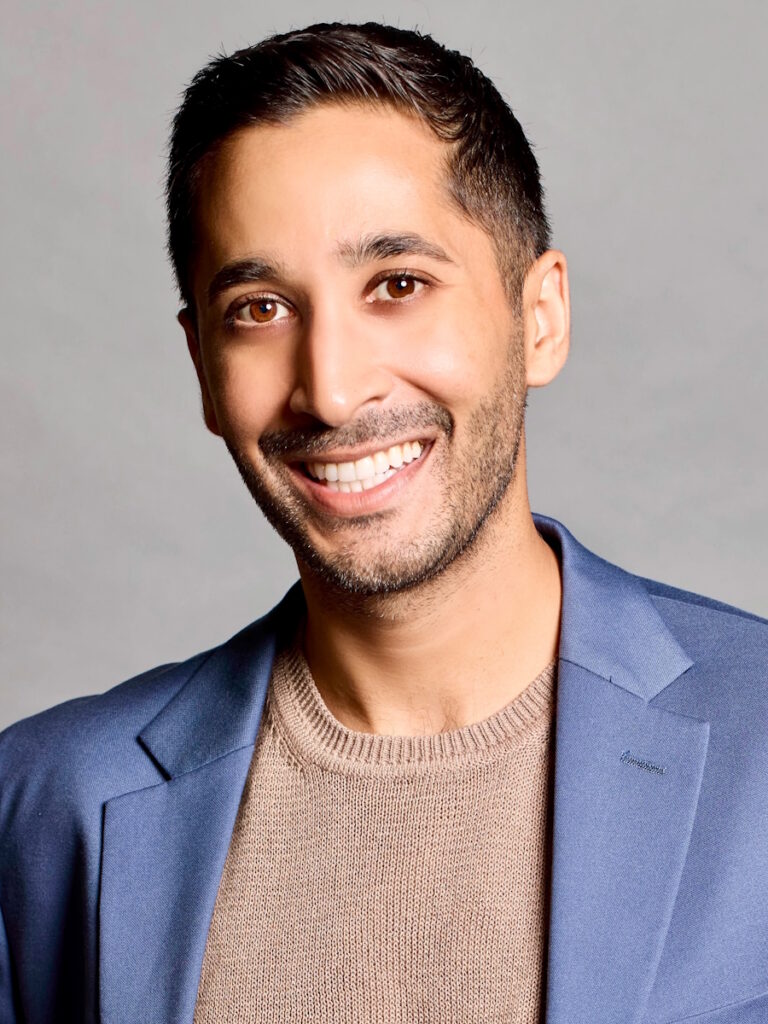
That wait for results, between the biopsy and the answer, is one Dr. Eric Singhi, a thoracic medical oncologist at The University of Texas MD Anderson Cancer Center, has watched countless patients go through.
“One of the hardest parts of cancer care is not always the treatment itself,” Dr. Singhi says. “It’s in the beginning when you’re waiting to get those biomarker testing results because it can take two or even three weeks. I want to stress that the wait can be absolutely worth it. Finding a biomarker allows your oncology team to deliver very precise medication that can work very well, hopefully with minimal toxicity, and hopefully for a very long time.”
Waiting for answers
Summer’s own wait had its own complications. “We waited a while for the tissue biopsy,” she says. “There were a couple of mishaps along the way.”
Dr. Singhi’s advice for patients in that stretch of not-knowing: “During that wait, what you can do as a patient is to focus on your mental health, prioritizing your physical health, and writing down any questions that you have for your team. Utilize that wait to your advantage to get stronger from a mental standpoint, from a physical standpoint, and to get ready to get started on your treatment.”
Summer and her family did their own version of that. “We spent a crazy amount of money on fireworks, my mom played the ukulele every night, and we celebrated life,” she says. They also did less celebratory things, like cleaning out closets, while she tried to make sense of how exhausted she felt and why. Facing the unknown, she went into what she calls a nesting mode.
The CROWN lorlatinib (Lorbrena) data is showing us that many patients can live long, durable lives, hopefully with a very good quality of life.
Dr. Eric Singhi, Thoracic Medical Oncologist, UT MD Anderson Cancer Center
The call that changed everything
Then the call came. “I had a genetic mutation. I was ALK positive, and I would not start with chemo,” Summer says. “I would start with four pills in the morning and four at night.”
Her doctor, the second opinion who ultimately became her primary oncologist, said, “This is the best news we could have asked for. This is fabulous. The whole treatment landscape has changed. This is what we wanted.”
“I am an obsessive researcher too, but I wasn’t there at that point,” Summer says. “I was still trying not to drown, literally and figuratively.” She’d already started pulling herself out a little when the ALK result landed, and it felt like new footing. “To this day, no one has ever said life expectancy to me directly. But when I Googled it, it said 7.5 years median. That right then was better than the three to six months I thought I had, from Googling pleural effusion. Right then, I knew we were dealing with some decent statistics.”
Dr. Singhi sees exactly why an ALK finding changes the conversation. “This is truly clinical because this is an opportunity to give patients very precise medicine that can hopefully last for years,” he says. “In the ALK space, we now have data coming back at five years and at seven years. The CROWN lorlatinib (Lorbrena) data is showing us that many patients can live long, durable lives, hopefully with a very good quality of life. This is a meaning and a message of durability and hope.”
“Your oncology team is not going anywhere,” Dr. Singhi adds. “We are here to support you throughout this journey.”
55% of patients remained progression-free at the 7-year mark, which is unheard of in this space.
Dr. Eric Singhi, Thoracic Medical Oncologist, UT MD Anderson Cancer Center
The data behind the hope
Over the years since, the data behind ALK-positive treatment has kept building, something Dr. Singhi tracks closely as part of his work in thoracic oncology.
“The biggest ALK story from ASCO 2026: We now have some of the longest and most durable targeted therapy data sets ever to be reported in metastatic lung cancer,” Dr. Singhi says. “I take that back. It’s not even metastatic lung cancer; it’s all solid tumors, which is an incredible story of durability.”
For Summer, that translates into something she can feel in her own life. “Yes, it is fearful, but you can still live with it,” she says. “It is manageable.”
Dr. Singhi points to specifics: “More than half of the patients are still benefiting on their first treatment, which is a pill that they take at home. This is incredible and unheard of to see it this long and this far out. Again, 55% of patients remained progression-free at the 7-year mark, which is unheard of in this space.”
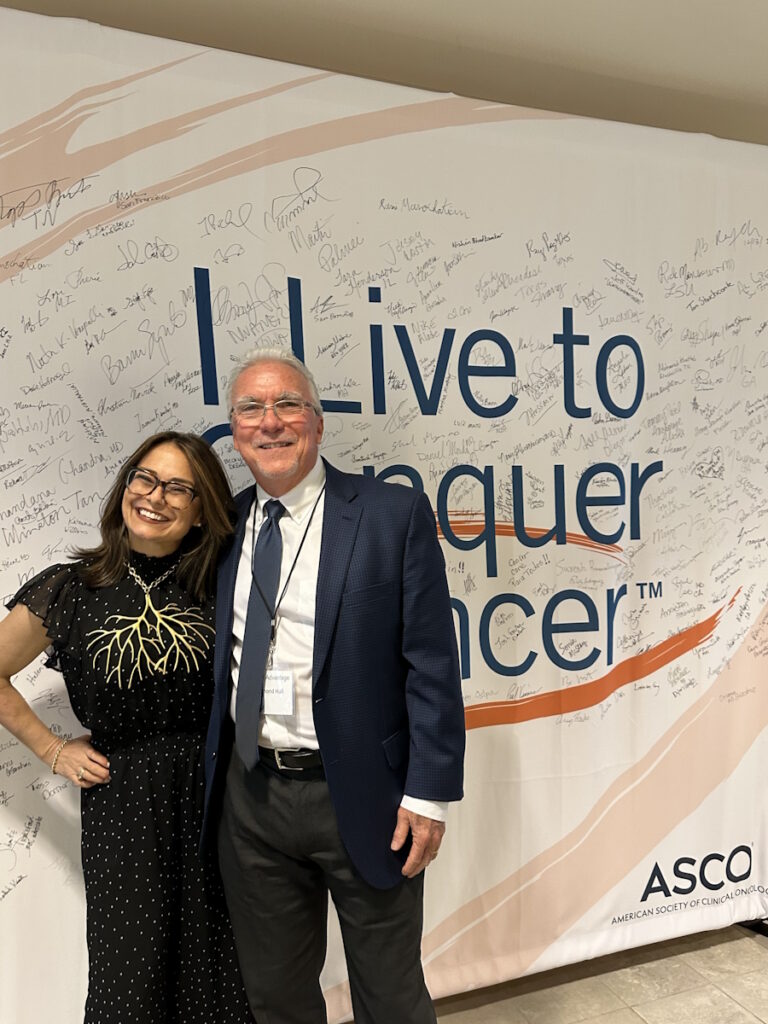
When I was diagnosed, the median life expectancy was 7.5 years, and now we’re seeing that patients on first-line treatment can be at seven years.
Summer Farmen, Stage 4 ALK-Positive Lung Cancer Patient Advocate
“I have another year to get to my seven years,” Summer says, “but I intend to be there.”
There’s a second milestone Dr. Singhi highlights, one aimed less at tomorrow and more at the years beyond it. “Patients don’t just want to know what’s going to happen tomorrow; they want to know what’s going to happen many months and many years from now. What can they hopefully expect?” he says. “One finding that stood out from this update was that if patients were still doing well at two years, if they did not have any evidence of cancer growth on first-line lorlatinib, there was nearly an 80% chance that they were still going to be progression-free many years later.”
“That is truly astounding,” Summer says. “It’s so amazing to hear that when I was diagnosed, the median life expectancy was 7.5 years, and now we’re seeing that patients on first-line treatment can be at seven years. That’s just where they are. We’re not even sure beyond that.”
For thoracic oncologists who have seen ALK-positive disease and its tropism for the brain, this has always been a big concern.
Dr. Eric Singhi, Thoracic Medical Oncologist, UT MD Anderson Cancer Center
The third piece of data Dr. Singhi points to is specific to where ALK-positive cancer likes to travel. “The third thing to emphasize was brain metastases,” he says. “One of the things that impressed me wasn’t just how long patients lived without progression, but also where the cancer wasn’t progressing. If patients were on lorlatinib and did not have any evidence of brain disease or growth of CNS (central nervous system) metastases at the two-and-a-half-year milestone, they didn’t see any more progression events in the brain after that. That is something unheard of. For thoracic oncologists who have seen ALK-positive disease and its tropism for the brain, this has always been a big concern. It’s incredibly meaningful to see that protecting the brain is actually happening, and lasting.”
Summer has seen why that specific fear is so real, not just in herself but in her wider community. “With ALK-positive cancer, the brain is definitely one of the areas it spreads to,” she says. “I have friends who were diagnosed without any lung symptoms at all. One was running a marathon and had a seizure because the cancer had gone to their brain. They didn’t know they had lung cancer. Someone else developed a sudden limp, and again, it was brain involvement. Yes, it goes to the brain. It’s a scary thing.”
“I think that’s very reassuring to be able to tell patients,” Dr. Singhi says.
I have a good quality of life for a stage 4 cancer patient. I’m back to lifting and transferring Jackson, and doing all of those things.
Summer Farmen, Stage 4 ALK-Positive Lung Cancer Patient Advocate
What living longer with ALK-positive lung cancer means

Six years in, Summer is candid that survival hasn’t meant an absence of side effects. “It’s not that there aren’t side effects,” she says. “I’m on blood pressure medications now. I never dealt with blood pressure before, and I have to have a cardiologist now. I’m also getting older, so some things you try to tease out. But there’s edema, weight gain, and extreme rashes that I scratch until I bleed. Ultimately, I have a good quality of life for a stage 4 cancer patient. I’m back to lifting and transferring Jackson, and doing all of those things.”
She’s also candid that living longer brings its own new category of problem. “It brings in the challenges of survivorship and long-term living,” she says. “What a great problem to have, though, but it definitely is a problem. When you’re living seven years or more with ALK-positive cancer, your cancer’s evolving. You might start with certain side effects, which might go away or ebb and flow, then new ones present. There are different challenges to living longer. Again, phenomenal that we’re in this space, but it still leaves a lot on the table.”
Dr. Singhi hears the same thing from patients navigating that same long horizon. “There’s so much hope,” he says. “The hope and the excitement though don’t mean that the journey is going to be easy. There’s just even more reason for hope than ever before.”
This year, Summer marked a milestone of her own. “I just celebrated my 50th birthday,” she says, “One that, six years ago, I never thought that I would see.”
It was the biggest gift and such a lifeline.
Summer Farmen, Stage 4 ALK-Positive Lung Cancer Patient Advocate
Finding her community
Some of what carried Summer through wasn’t clinical at all. Her father was the one who found the ALK Positive website, which led the family to an ALK Positive Facebook community. Summer had never been in a support group before, and she didn’t expect to need one. Her dad pushed it on her anyway.
“I’m telling you about this crazy supportive family that I have,” Summer says, “But nobody gets it quite like somebody actually living it, as somebody wouldn’t understand being a caregiver quite like somebody else who is a caregiver. It was, again, about being seen and being able to talk to people.”
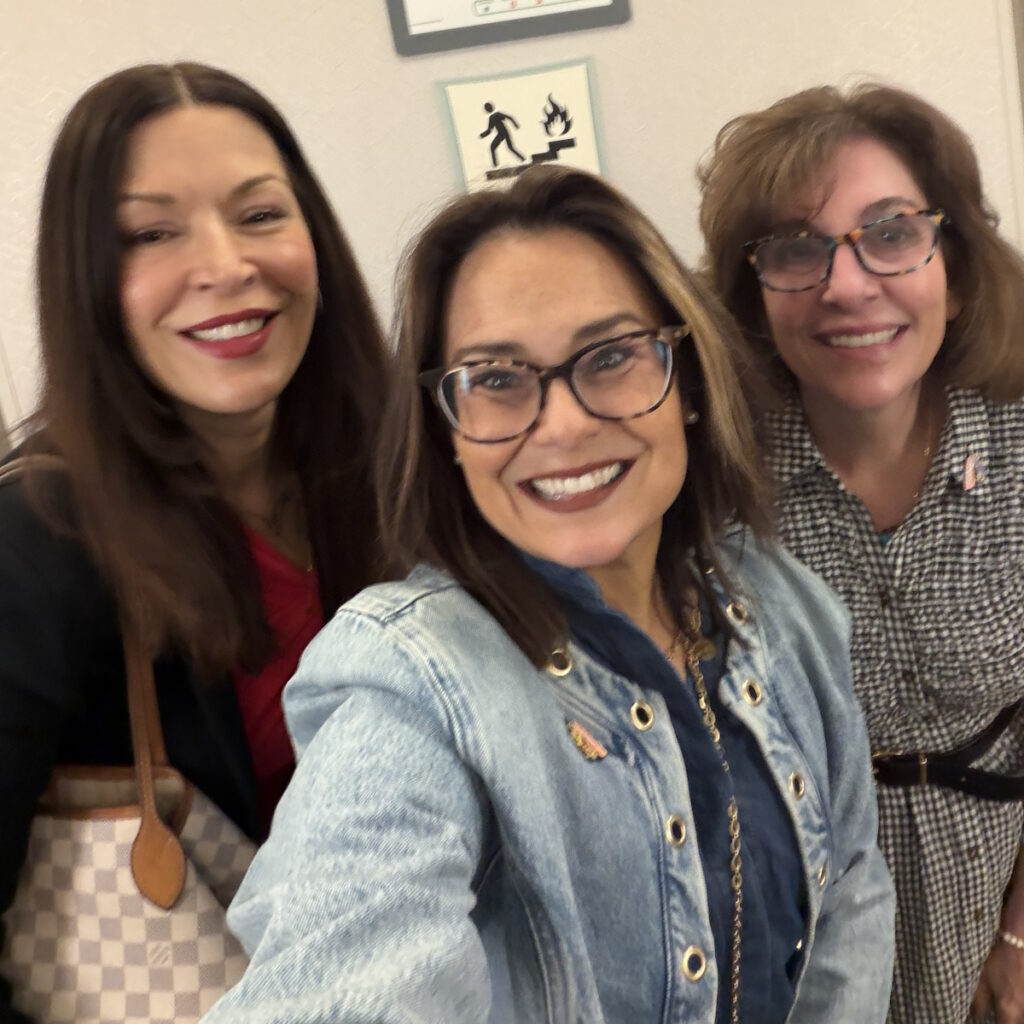
Reach out and find your community of people.
Summer Farmen, Stage 4 ALK-Positive Lung Cancer Patient Advocate
You’re not in this alone
Asked what she’d want the next person to know, Summer doesn’t hesitate. “You’re not in this alone. That would be my number one piece of advice.”
“You could be surrounded by people and still feel alone,” she says. “People aren’t always sure how to best support or respond to a cancer diagnosis, so even those who love you the most may not necessarily be supporting you in the way that you need. Reach out and find your community of people who are living the same life because in that common diagnosis, there is a shared bond.”
Program Sponsor
Thank you to our sponsor for their support of our independent patient education program. The Patient Story retains full editorial control over all content.
This interview has been edited for clarity and length. The views and opinions expressed in this interview do not necessarily reflect those of The Patient Story. This content does not replace professional medical advice.
Inspired by Summer’s story?
Share your story, too!
Hear from people living with ALK-positive lung cancer
Real experiences with diagnosis, treatment choices, side effects, and life beyond ALK-positive lung cancer — in their own words.

Leave a Reply